Find What You’re Looking For
Find What You’re Looking For
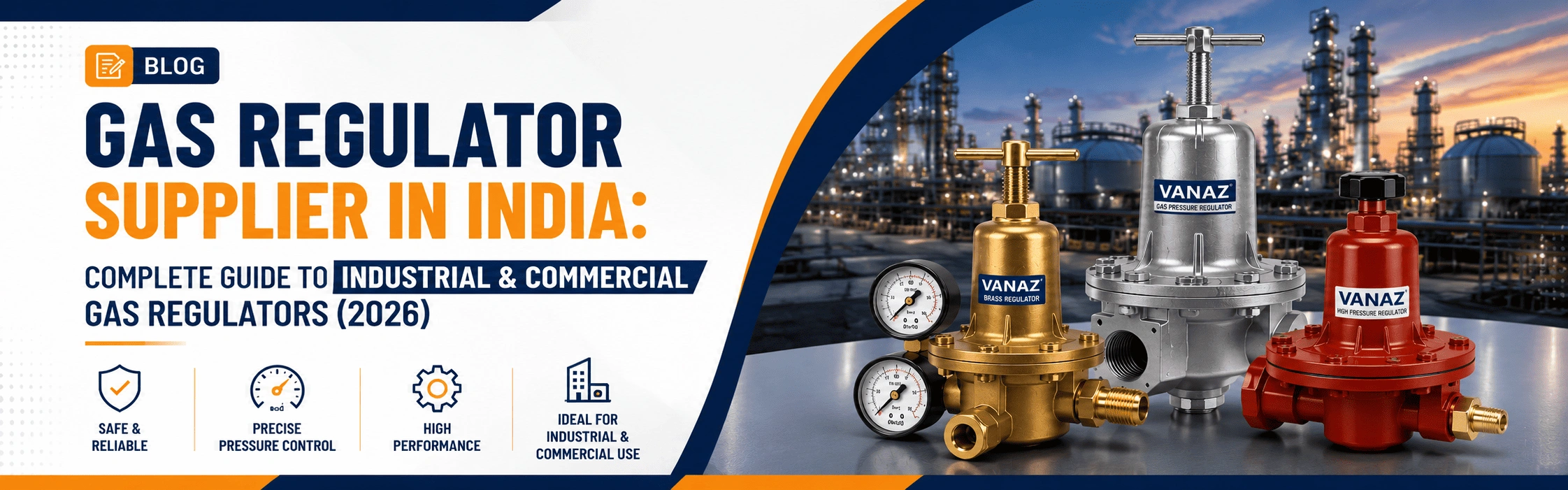
Industrial gas systems play a critical role in manufacturing, healthcare, pharmaceuticals, food processing, hospitality, and many other industries. One of the most important components of any gas pipeline system is the gas regulator, which ensures that gas pressure is controlled safely and efficiently.
If you are looking for a Gas Regulator Supplier in India, understanding how industrial gas regulators work, their types, applications, and selection criteria can help you choose the right solution for your business.
A gas regulator is a pressure control device that reduces high inlet gas pressure from cylinders, tanks, or pipelines to a stable and usable outlet pressure. It automatically adjusts the gas flow to maintain consistent pressure even when the inlet pressure fluctuates.
Gas regulators help improve:
Gas enters the regulator at high pressure through the inlet connection. Inside the regulator, a diaphragm, spring, and valve mechanism work together to reduce the pressure and maintain a controlled outlet pressure.
As downstream demand changes, the regulator automatically opens or closes the valve to keep the outlet pressure stable. This ensures smooth operation without frequent manual adjustments.
A typical industrial gas regulator consists of:
These components are designed to provide accurate pressure control and long service life in demanding industrial environments.
Incorrect gas pressure can damage equipment, increase gas consumption, and create serious safety risks. A properly selected regulator helps maintain safe and efficient operation.
LPG | Oxygen | Hydrogen | Helium |
PNG | Nitrogen | Acetylene | Medical gases |
Natural Gas | Carbon Dioxide | Argon | Specialty gases |
| Factor | Why It Matters |
|---|---|
| Gas Type | Different gases require different materials and designs. |
| Inlet Pressure | The regulator must safely handle the supply pressure. |
| Outlet Pressure | Choose a model that maintains the required working pressure. |
| Flow Capacity | Ensure sufficient gas flow during peak demand. |
| Operating Environment | Consider temperature, humidity, dust, and corrosion. |
| Safety Standards | Select regulators that comply with industrial quality and safety requirements. |
Ans. : A gas regulator reduces high-pressure gas from a cylinder or pipeline to a safe, consistent working pressure for equipment.
Ans. : The correct regulator depends on gas type, inlet pressure, outlet pressure, flow rate, and application requirements.
Ans. : No. Regulators should always be selected according to gas compatibility and pressure requirements.
Ans. : Manufacturing, healthcare, pharmaceuticals, laboratories, food processing, hotels, restaurants, welding, and chemical industries all rely on gas regulators.
A gas regulator is a critical component that protects equipment, improves efficiency, and ensures safe gas distribution. Choosing a high-quality regulator from a trusted supplier helps reduce operational risks, improve productivity, and support long-term reliability.
Star Gas Service is proud to be a trusted Gas Regulator Supplier in India, offering durable, precision-engineered gas regulators and complete gas pipeline equipment for industrial and commercial applications. With more than 30 years of experience, advanced manufacturing capabilities, and a commitment to quality, we provide solutions that meet the evolving needs of modern industries.
Whether you require a single regulator or a complete gas pipeline system, our experienced team is ready to help you select the right products for your application.